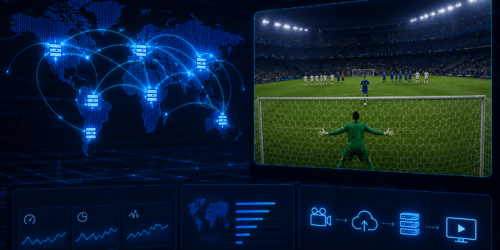

Streaming piracy creates a uniquely difficult operational challenge for content providers.
Unlike traditional cybersecurity threats, anti-piracy systems for video platforms must analyze massive volumes of streaming sessions in real time while maintaining the strict delivery requirements expected from premium live video services. Any additional processing introduced by anti-piracy mechanisms must operate without negatively affecting scalability, latency, reliability, or quality of experience.
This is where the difference between a generic CDN and a CDN specifically designed for video streaming becomes critical.
Video streaming infrastructures already operate under stricter constraints than most internet services. Premium live streaming requires maintaining stable quality of experience, controlled latency, and reliable delivery across massive traffic peaks involving millions of concurrent viewers.
A general-purpose CDN can deliver video traffic, but it is typically not designed to combine large-scale streaming delivery with real-time video-aware anti-piracy analysis. A CDN engineered specifically for video streaming is built from the ground up to support both simultaneously.
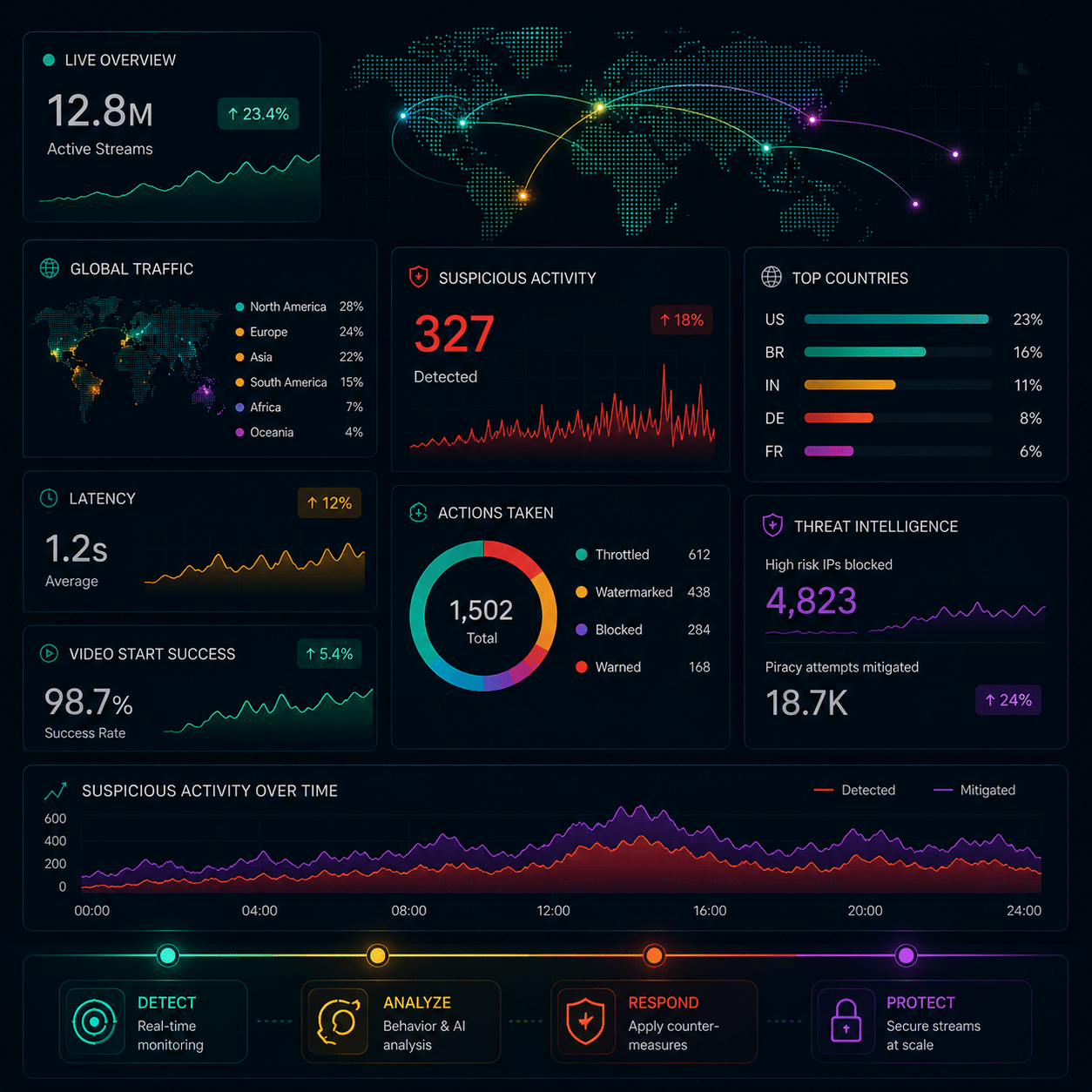
The challenge is fundamentally asymmetrical: anti-piracy systems must continuously monitor millions of streaming sessions and react immediately to suspicious behaviors, while pirates only need a single successful stream capture to redistribute content illegally.
This requires infrastructure capable of analyzing streaming usage patterns at scale without disrupting the viewing experience itself.
Why Generic CDNs Have Limitations for Real-Time Anti-Piracy
CDNs are primarily optimized for transporting data efficiently across networks. Video streaming environments introduce additional operational requirements because anti-piracy analysis must take place alongside highly demanding live delivery workflows.
The objective is not only to identify suspicious network activity, but also to detect behaviors related specifically to how streaming services are consumed.
A video-specialized CDN can correlate traditional traffic indicators with video-layer intelligence such as:
- unusually long uninterrupted viewing sessions
- simultaneous consumption patterns inconsistent with normal user behavior
- simultaneous use of different resolutions or audio tracks for the same content
- abnormal content consumption volumes compared to typical viewers’
- suspicious session distribution patterns across regions or devices
This deeper visibility allows operators to identify behaviors that may indicate stream redistribution or credential abuse more accurately than with transport-level analysis alone.
Because the CDN already operates at the core of the streaming workflow, this analysis can happen continuously and in real time without introducing additional operational complexity.
How a CDN Specialized for Video Delivery Strengthens Anti-Piracy Operations
The key advantage of a CDN specifically designed for video streaming is not simply better delivery performance. It is the ability to integrate anti-piracy mechanisms directly into the streaming workflow while still maintaining the performance requirements of premium live video.
This becomes especially important during high-profile live events where infrastructures must simultaneously:
- absorb very large traffic peaks
- maintain low and controlled latency
- preserve playback stability and QoE
- monitor millions of active sessions in real time
- detect suspicious streaming behaviors immediately
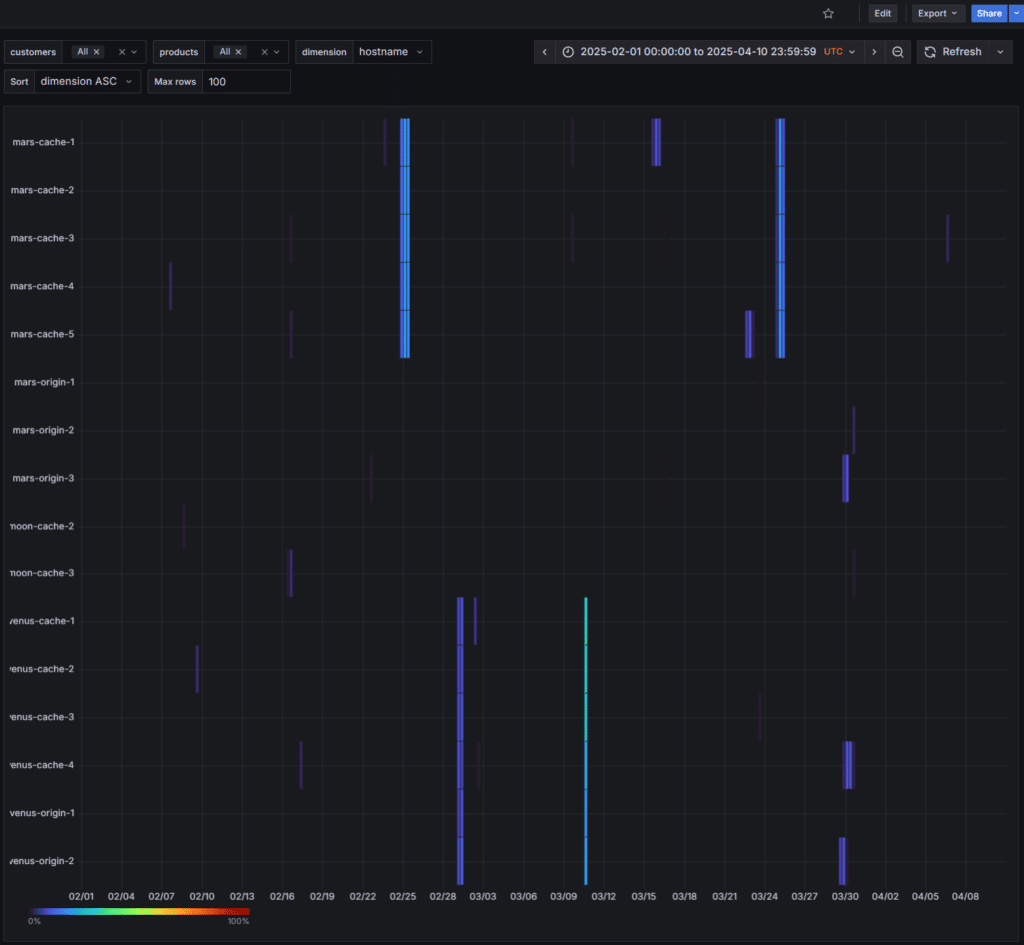
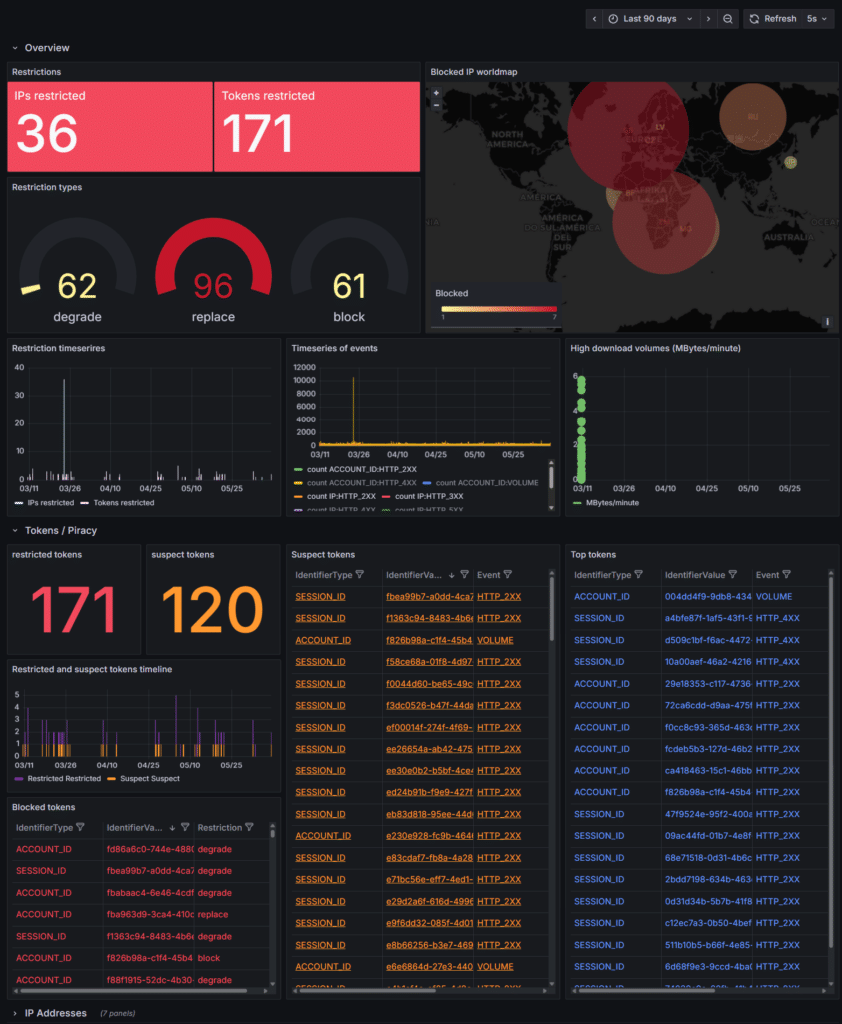
A CDN optimized for video streaming is designed precisely for these constraints.
This creates the foundation for more advanced anti-piracy operations that work directly at the video layer rather than only at the transport or session level.
Smarter Counter-Measures at the Video Layer
Another major advantage of video-specialized CDN architectures is the ability to apply more sophisticated responses once suspicious activity is detected.
Traditional anti-piracy reactions often rely on aggressive session termination or blocking mechanisms. While effective in some cases, these approaches are easy for piracy platforms to detect and circumvent.
Unlike immediate session termination, custom responses are more difficult for piracy platforms to identify automatically and therefore harder to bypass quickly. This limits the ability of pirate services to trigger rapid workaround mechanisms or instantly switch to alternative distribution paths.
A CDN specifically designed for streaming video can enable advanced counter-measures directly at the video level, such as:
- dynamically limiting bitrate quality
- introducing controlled video artefacts
- replacing content with warning messages
- degrading stream consistency for suspicious sessions
These actions can make illegal redistribution significantly more difficult while remaining less detectable than traditional blocking approaches.
This type of video-aware response is much harder to implement within generic CDN architectures that primarily operate at the transport layer.
Conclusion
Streaming piracy is no longer only a security or enforcement issue. It has become a real-time operational challenge for streaming platforms.
For content providers, protecting premium streams also means protecting the substantial investments made into content acquisition, live sports rights, and streaming monetization strategies.
Detecting suspicious streaming behaviors, analyzing millions of sessions, and applying anti-piracy counter-measures must now happen without compromising delivery stability, latency, scalability, or viewer experience.
That is the real difference between a generic CDN and a CDN specifically designed for video streaming.
A video-specialized CDN is not simply optimized to deliver video efficiently. It is designed to apply real-time anti-piracy intelligence at video scale while still maintaining the performance requirements of premium live streaming.
Achieving both real-time anti-piracy intelligence and premium streaming performance at scale requires infrastructure specifically designed from the ground up for video streaming.
As competition for premium content intensifies, the ability to protect both audience experience and content value will become an increasingly strategic advantage for streaming platforms.
Protect premium streams with a CDN specifically designed for video streaming.
Discover how broadpeak.io combines scalable delivery, real-time anti-piracy intelligence, and high-quality streaming performance, without compromising QoE or latency.